

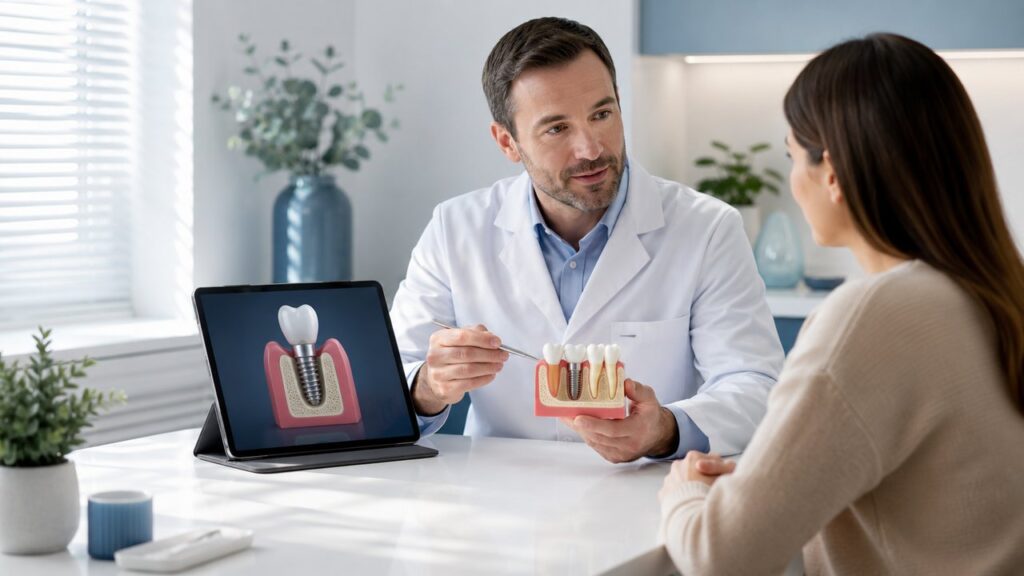
Losing one or more teeth is a common situation that many people face at some point in their lives. Although missing teeth may at first seem like only an aesthetic problem, when left untreated they negatively affect many areas, from oral health to overall quality of life. The space left by a lost tooth sets the stage over time for a series of problems affecting not only that area but the entire chewing system. Fortunately, modern dentistry offers permanent and comfortable solutions suited to every situation. In this article we take a detailed look at the causes of missing teeth, the risks they pose, and all the treatment options, from implants to bridges and from dentures to full-mouth solutions.
The main causes of missing teeth
There is no single cause behind tooth loss; often several factors come together. Identifying the cause correctly is very important both for solving the current problem and for preventing new losses. The most common causes are:
- Advanced tooth decay: Cavities not treated in time progress into the inner tissues of the tooth; when the tooth is damaged beyond saving, extraction may become unavoidable.
- Gum diseases: Advanced gum disease (periodontitis) causes the destruction of the bone and supporting tissues around the tooth. Teeth gradually lose their support, loosen and fall out. It is one of the most important causes of tooth loss in adults.
- Trauma and accidents: Teeth can be fractured or completely lost as a result of impact, falls or sports injuries.
- Congenitally missing teeth: In some people one or more teeth never form (hypodontia); this can be genetic.
- Excessive wear and clenching: Long-term clenching and grinding (bruxism) can contribute to the weakening, cracking and eventual loss of teeth.
- Lack of care and neglect: Neglecting regular oral care and check-ups causes small problems to grow into tooth loss.
The World Health Organization (WHO) notes that oral diseases are among the most common health problems worldwide and that severe tooth loss affects millions of people. This picture shows how common and important an issue missing teeth are.
Why should missing teeth be taken seriously?
When the space left by a lost tooth is left empty, the balance in the mouth is disrupted over time. Teeth are a whole that support one another and work in harmony; when a part is missing from this whole, the other teeth are also affected. Even a single missing tooth can, in the long term, lead to a series of problems affecting the entire chewing system. That is why missing teeth are not an aesthetic preference that can be postponed, but a subject that directly concerns oral health.
Problems caused by missing teeth
The main consequences of untreated missing teeth are:
- Jawbone loss: The tooth root stimulates the jawbone during chewing, keeping it healthy and dense. When a tooth is lost, this stimulation disappears and the bone in the area begins to melt away over time. As bone loss progresses, future treatments also become more difficult.
- Shifting of neighboring teeth: Adjacent teeth tilt toward the space, while teeth in the opposing jaw may over-erupt. These shifts disrupt tooth alignment and the bite, opening the door to new problems.
- Reduced chewing function: Missing teeth make chewing difficult; a person may start chewing on one side without realizing it. This negatively affects digestion and eating habits.
- Speech problems: Missing teeth, especially in the front region, can make it harder to pronounce certain letters and sounds.
- Changes in facial features: Long-term tooth and bone loss can cause the cheeks to sink in and the face to look older than it is.
- Psychological and social effects: Hesitating to smile, loss of confidence and withdrawal from social settings are common but often overlooked effects of missing teeth.
Missing teeth and general health
Oral health is an integral part of general health. Reduced chewing capacity due to missing teeth can cause a person to avoid certain foods and to have a one-sided diet. An unbalanced diet, in turn, affects general health in the long term. In addition, impaired chewing function makes the first stage of digestion harder. That is why treating missing teeth is important not only for the mouth but also for overall quality of life.
Treatment option 1: Dental implant
An implant is the most permanent solution, consisting of a titanium screw placed in the jawbone in place of the missing tooth and a prosthesis fitted on top. Because it replaces both the root and the visible part of the natural tooth, it gives the result closest to a natural tooth both functionally and aesthetically. Its biggest advantage is that it is applied without touching the healthy neighboring teeth and prevents bone loss by stimulating the jawbone. With proper care and regular check-ups it can be used for many years, often a lifetime. It is preferred safely across a wide range, from a single missing tooth to multiple losses.
How does implant treatment progress?
Implant treatment is a planned process consisting of several stages. First, the structure of the jawbone is assessed with a detailed examination and imaging, and the position of the implant is planned. Then the implant is placed in the jawbone under local anesthesia; no pain is felt during this procedure. During the healing period, a few months are allowed for the implant to fuse firmly with the bone (osseointegration). Once fusion is complete, the permanent prosthesis is placed on the implant and treatment is completed. Where bone volume is insufficient, the area can be prepared for the implant with additional procedures such as grafting.
Treatment option 2: Dental bridge
A bridge is a method in which the teeth on either side of the missing tooth are reduced and used as support, and the gap in between is filled with a fixed prosthesis. It offers a fixed and comfortable solution and is easy for the patient to get used to. However, its most important disadvantage is that it requires grinding down the healthy neighboring teeth. It is a good alternative in some situations where an implant is not suitable, or according to the patient’s preference. Because a bridge does not stimulate the jawbone like an implant, bone loss may continue over time in the area beneath it; regular follow-up is therefore important.
Treatment option 3: Removable dentures
Removable dentures are solutions that can be taken in and out, preferred where multiple teeth are missing. Partial dentures fill the missing areas by attaching to the existing teeth, while complete dentures are used where all teeth are missing. While they are an economical option applicable in extensive cases, the adaptation period can be longer than with fixed solutions and they require regular care. Today, implant-supported removable dentures stand out as a modern option that significantly increases both retention and comfort.
Solutions for full edentulism
When all teeth are lost, two main solutions stand out. The first is traditional complete dentures; the second is implant-supported fixed or removable prostheses. While traditional dentures offer an economical solution, slipping and retention problems can occur over time. Implant-supported solutions, fixed onto a small number of implants, provide a more secure and natural chewing experience that does not slip. These solutions can significantly improve quality of life and confidence in full edentulism.
Which treatment is right for me?
The most suitable treatment depends on the number of missing teeth, the condition of the jawbone, general health, aesthetic expectations and personal preference. For example, while an implant is often ideal for a patient with adequate bone and a single missing tooth, a bridge or denture may be more suitable for a patient missing several teeth and not suited to implants. Bone volume, gum health and the person’s general health are also important factors affecting planning. A detailed examination, imaging and personalized assessment are essential for making the right decision; no single method is the best option for everyone.
Is it possible to prevent missing teeth?
A significant proportion of tooth loss can be prevented with proper care and regular check-ups. Brushing twice a day with the correct technique, daily flossing and a balanced diet reduce the risk of decay and gum disease. A dental check-up every six months is the most effective way to prevent tooth loss by catching problems before they grow. Using protective appliances during sports and having clenching treated also protect the teeth. In short, a preventive approach is the smartest way never to face missing teeth in the first place.
Care after treatment
Whatever treatment is applied, regular care is necessary for a long-lasting result. Like natural teeth, implants, bridges and dentures require daily brushing and appropriate interdental cleaning. It is important for denture wearers to clean their dentures regularly and for those with fixed solutions to use floss or an interdental brush. Preserving the health of the gum around the implant is especially critical for the implant to last. A dental check-up every six months safeguards both the state of the treatment and the health of the remaining teeth.
The importance of early treatment
Time is an important factor with missing teeth. The longer the space is left untreated, the more the bone loss in the jaw and the shifting of neighboring teeth progress, which both makes future treatment more difficult and widens its scope. Assessing the loss early makes it possible both to have more treatment options and to have a simpler, more comfortable and predictable process. That is why it is recommended to consult a dentist without delay when you notice a missing tooth.
Common mistakes with missing teeth
When it comes to missing teeth, some common mistakes cause the problem to grow. One of the most frequent is continually postponing treatment; yet every month that passes matters in terms of bone loss and tooth shifting. Another mistake is dismissing a missing back tooth by thinking “it doesn’t show anyway”; however, these unseen teeth play a critical role in chewing and the bite. Doing nothing out of cost concern is another error that leads to more extensive and difficult treatments in the long run. Finally, neglecting care after treatment is completed shortens the lifespan of the result achieved. The way to avoid these mistakes is to assess the loss early and follow your dentist’s recommendations.
What to consider before treatment
There are a few important points to consider before starting treatment for missing teeth. First, informing your dentist about any medications you use and any systemic diseases you have is necessary for treatment to be planned safely. A detailed examination and the necessary imaging reveal the condition of the jawbone and existing teeth, allowing the most suitable method to be determined. It is also important to have realistic expectations of treatment and to get information about the stages of the process in advance. This preparation both increases the success of treatment and helps you feel secure throughout the process.
Frequently Asked Questions
I’m missing just one tooth, do I need treatment?
Yes. Even a single missing tooth can lead over time to bone loss, shifting of neighboring teeth and a disrupted bite. Early treatment prevents these problems from forming.
Which is better, an implant or a bridge?
An implant is applied without touching neighboring teeth and prevents bone loss; a bridge is a good alternative where an implant is not suitable. The best option is determined after a detailed examination.
Do missing teeth affect the shape of the face?
Long-term tooth and bone loss can cause the cheeks to sink in and the face to look older. Early treatment helps prevent this change.
Is it hard to use a denture?
There may be a short adaptation period at first. Implant-supported dentures make this process significantly easier by increasing retention and comfort.
How long should I wait after a tooth is extracted?
The waiting time depends on the healing of the area and the type of treatment to be applied. The best timing is determined by your dentist’s assessment.
Is treatment for missing teeth painful?
Because the treatments are done under local anesthesia, no pain is felt during the procedure. Any mild discomfort afterwards is easily controlled with simple measures.
To determine the most suitable treatment for your missing teeth together, you can book an appointment at Beyaz Köşe Oral and Dental Health Clinic.