

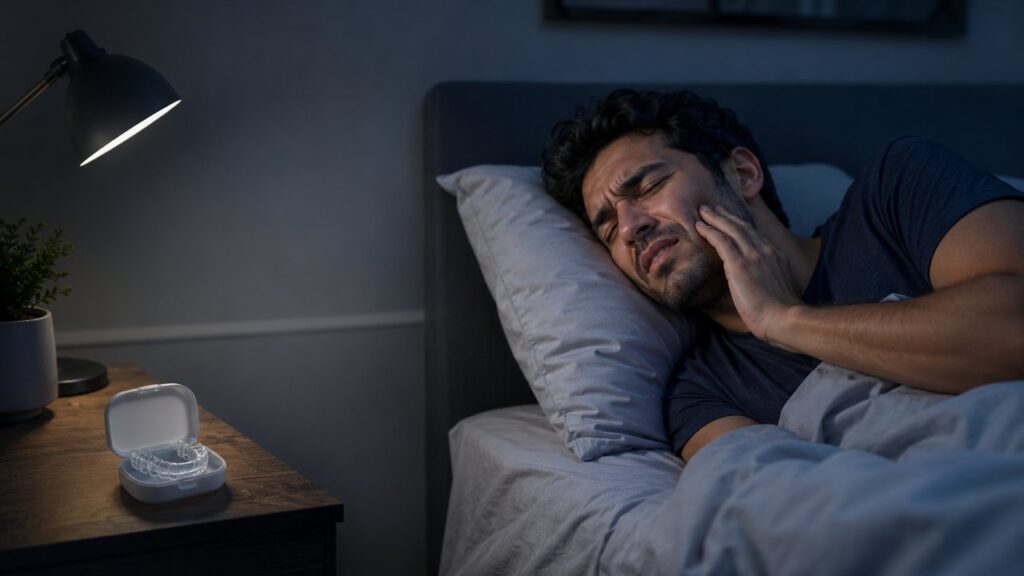
If you wake up in the morning with jaw fatigue, a headache or tooth sensitivity, you may be clenching or grinding your teeth without realizing it. This condition, called bruxism in medical terms, is today one of the most common dental problems accompanying the busy and stressful pace of life. Because it often occurs during sleep and without the person’s knowledge, it may go unnoticed for a long time; however, when left untreated, it can lead to tooth wear, cracks, sensitivity and jaw joint problems. In this comprehensive article we take a detailed look at what bruxism is, why it occurs, its symptoms, the damage it does to teeth and its treatment.
What is bruxism (teeth clenching)?
Bruxism is the unconscious and forceful clenching of the teeth or grinding them by rubbing them against one another. This occurs involuntarily, without a functional purpose such as chewing. During bruxism, a force far above normal is applied to the teeth and jaw muscles; this constant and excessive pressure can, over time, damage the teeth, the jaw joint and the surrounding tissues. Bruxism can be seen both while awake (daytime) and during sleep (night). The person is often unaware that they are clenching their teeth; the condition is usually noticed by someone close to them or revealed during a dental examination. Noticing and managing bruxism early is important for protecting the long-term health of the teeth.
Why does bruxism occur?
The cause of bruxism often cannot be attributed to a single factor; it is thought that different factors play a role together. Today, one of the most prominent causes is stress and anxiety; a busy pace, tension and emotional load trigger teeth clenching in many people. In addition, sleep pattern disturbances, bite (how the teeth meet) problems, certain habits and personality traits are also associated with bruxism. Bruxism can in some cases be seen together with other factors. Whatever the cause, the damage bruxism can do to the teeth is similar. For this reason, it is important to assess possible underlying factors and to create a suitable management plan.
Stress and teeth clenching
Today, the factor most commonly associated with bruxism is stress. A busy work pace, anxiety, tension and emotional load lead to unconscious teeth clenching or grinding in many people. Under stress, the jaw muscles tense, and this tension often shows itself as clenching of the teeth during sleep. The fatigue felt in the jaw and face area in the mornings can be a result of this contraction lasting throughout the night. In the management of stress-related bruxism, lifestyle adjustments aimed at reducing stress play an important role. However, it should be remembered that stress is not always the only cause and that bruxism may require a multifaceted approach. A personalized assessment is always the most correct approach.
Daytime and nighttime bruxism
Bruxism is evaluated in two main groups according to when it occurs. Daytime bruxism is the clenching of the teeth while the person is awake, usually during stressful moments or intense concentration; this often develops as a habit, and when the person notices it, they can try to control the behavior. Nighttime bruxism, on the other hand, occurs completely involuntarily during sleep; because the person’s control is not possible, it is usually more challenging. Nighttime teeth clenching can show itself with symptoms such as jaw fatigue, headache and tooth sensitivity in the mornings. Approaches aimed at protecting the teeth are important in both types; however, in nighttime bruxism, a protective night guard often comes onto the agenda. Which type is involved is assessed by examination.
Symptoms of bruxism
Because bruxism is a condition the person is often unaware of, it is important to recognize its symptoms. Common symptoms are:
- Morning jaw and face fatigue: Due to the contraction lasting throughout the night, fatigue or pain may be felt in the jaw on waking.
- Headache: Headaches felt in the mornings, especially in the temple area, may occur.
- Tooth wear and flattening: The chewing surfaces can wear away over time.
- Tooth sensitivity: Cold-hot sensitivity can develop due to enamel wear.
- Sound or pain in the jaw joint: Discomfort may be felt when opening and closing the mouth.
If you experience one of these symptoms, it is recommended that you see a dentist for an assessment.
The damage teeth clenching does to teeth
One of the most important consequences of bruxism is the lasting damage it creates on the teeth. The constantly applied excessive force wears away the chewing surfaces of the teeth and can, over time, cause the teeth to flatten. As enamel wears away, the dentin beneath is exposed and tooth sensitivity develops. Excessive pressure can cause cracks and even fractures in the teeth; it can also cause damage to existing fillings and crowns. In advanced cases, gum recession and strain on the supporting tissues can also be seen. Worn or damaged teeth may need to be restored appropriately; restorative dentistry comes into play here. Noticing and managing bruxism early is of critical importance in preventing this damage.
Bruxism and jaw joint (TMJ) problems
Bruxism can affect not only the teeth but also the jaw joint and the muscles around it. The jaw joint is an important structure that connects the lower jaw to the skull and enables functions such as chewing and speaking. Constant teeth clenching can create excessive load on this joint and muscles, leading to problems over time. A sound in the jaw joint, difficulty opening and closing the mouth, and jaw and face pain can be among the symptoms of such problems. These complaints can affect daily comfort and may require treatment. When jaw joint problems are involved, the management of bruxism can be an important part of treatment. For this reason, ongoing discomfort in the jaw area should always be assessed by a dentist.
Bruxism and headache
An often overlooked symptom of bruxism is headache. Teeth clenching lasting throughout the night causes excessive contraction of the muscles in the jaw and temple area; this can cause headaches felt especially in the mornings. Such headaches often concentrate in the temple area, and the person may not notice their source. If a recurring morning headache is seen together with jaw fatigue and tooth sensitivity, bruxism may underlie it. Knowing this connection helps both to understand the source of the headache and to determine the correct approach. If you are wondering about the cause of your morning headaches, a dental assessment can be enlightening on the subject.
How is bruxism diagnosed?
Bruxism is diagnosed through an examination by the dentist. The dentist assesses the wear marks on the teeth, the flattening of the chewing surfaces, enamel cracks and the condition of existing restorations. Examination of the jaw muscles and joint is also part of the assessment. In addition, the person’s symptoms (such as morning jaw fatigue and headache) and, if any, the observations of someone close to them help with the diagnosis. Organizations such as the American Dental Association (ADA) also emphasize that regular dental examinations are important in noticing the signs of bruxism. Early diagnosis is valuable for protecting the teeth and creating a suitable management plan.
What is a night guard (protective plate)?
A night guard is one of the most commonly used approaches in the management of bruxism. This transparent plate, prepared specifically for the person, is worn over the teeth during sleep and creates a protective layer between the lower and upper teeth. In this way, the force created during teeth clenching is transferred to the plate rather than directly to the teeth; thus wear and damage to the teeth are reduced. A night guard does not completely eliminate bruxism, but it helps protect the teeth from the effects of teeth clenching. Preparing the plate specifically for the person and correctly is important for it to be comfortable and effective. Whether a night guard is suitable for you and how it should be used is determined by the dentist.
Bruxism treatment
Bruxism treatment requires a multifaceted approach according to the underlying cause and the severity of the situation. The most common method aimed at protecting the teeth is the use of a night guard. In stress-related bruxism, lifestyle adjustments and relaxation techniques aimed at reducing stress play a supporting role. If there is a cause such as a bite problem, this may need to be assessed. Restoring worn or damaged teeth can also be part of treatment. The aim of treatment is both to protect the teeth from the effects of teeth clenching and, if possible, to address the underlying factors. Bruxism management is personalized; which approaches are suitable is determined by your dentist after a detailed examination.
Teeth grinding in children
Teeth grinding is common not only in adults but also in children. Especially during the baby teeth period, temporary teeth grinding can be observed in many children. Bruxism in childhood can often decrease on its own with growth; however, in every case it is important to have it assessed by a dentist. If teeth grinding in children leads to tooth wear, sensitivity or jaw discomfort, the dentist can recommend a suitable approach. It is helpful for parents to share the situation with the dentist when they notice that their children are grinding their teeth. Early assessment is important both for protecting the child’s dental health and for taking the necessary measures in time.
Recommendations to prevent bruxism
There are some measures that can be taken to reduce the effects of bruxism. Lifestyle adjustments aimed at managing stress, regular and adequate sleep, relaxation techniques and relaxing the jaw muscles during the day can be helpful. Reducing caffeine and stimulant consumption before sleep can support more restful sleep. Becoming aware of the habit of clenching the teeth during the day and consciously relaxing the jaw can help with daytime bruxism. Regular dental check-ups allow the signs of bruxism to be noticed early. Although these measures do not completely eliminate bruxism, they contribute to reducing its effects and protecting the teeth. It is best to consult your dentist for personalized recommendations.
When should you see a dentist?
If you wake up in the mornings with jaw fatigue, a headache or tooth sensitivity, if you notice wear on your teeth or if someone close to you says that you grind your teeth at night, it is recommended that you see a dentist. A sound in the jaw joint, difficulty opening and closing the mouth or jaw pain are also symptoms that need to be assessed. When bruxism is noticed early, it is possible to take measures while the damage to the teeth has not yet progressed. Untreated bruxism, on the other hand, can lead to more serious dental and jaw problems over time. For this reason, it is important not to ignore the symptoms and not to skip regular check-ups. Early intervention is the most effective way to protect the long-term health of your teeth.
Common misconceptions about bruxism
One of the most common misconceptions about bruxism is that teeth clenching is a harmless habit; in reality, when left untreated, it can cause serious damage to the teeth. Another misconception is that bruxism is only seen in children; in reality, it is also quite common in adults. In addition, it is thought that a night guard completely treats bruxism; in reality, the plate does not eliminate teeth clenching but helps protect the teeth from its effects. It is also wrong that teeth clenching is always noticeable; most people are not even aware that they clench their teeth. The most reliable way to reach accurate information is to consult an experienced dentist.
Frequently Asked Questions
Why does bruxism (teeth clenching) occur?
The factor most commonly associated is stress. Sleep patterns, bite problems and certain habits can also play a role. The cause is often multifactorial.
How do I know if I clench my teeth?
Morning jaw fatigue, headache, tooth sensitivity and tooth wear are typical signs. Most people learn that they clench their teeth from someone close to them or from the dentist.
Does a night guard treat bruxism?
A night guard does not eliminate teeth clenching, but it helps protect the teeth from its effects (wear, cracks). Preparing it specifically for the person is important.
Does bruxism damage the teeth?
Yes. Constant excessive force can lead to wear, cracks, fractures and sensitivity in the teeth; it can also damage fillings and crowns. Early management is important.
Is teeth grinding in children normal?
It is common during the baby teeth period and can often decrease with growth. Nonetheless, it is recommended that it be assessed by a dentist in every case.
Does bruxism cause headaches?
Yes. Teeth clenching lasting throughout the night strains the jaw and temple muscles; it can cause headaches felt especially in the mornings.
If you have a complaint of teeth clenching or grinding, you can book an appointment at Beyaz Köşe Oral and Dental Health Clinic to protect your teeth and plan a suitable approach.