

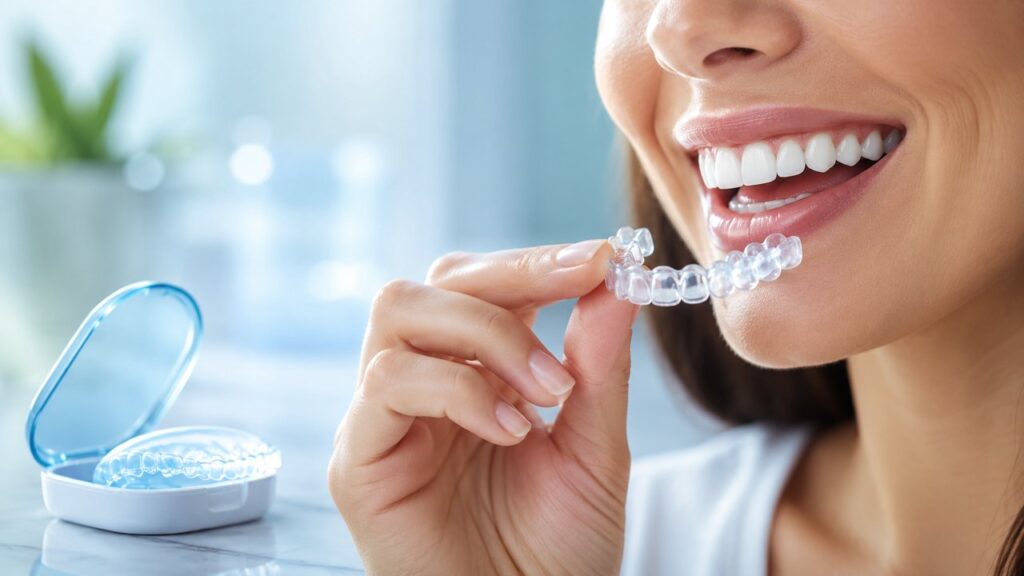
For many people who want a well-aligned, aesthetic smile but are hesitant about metal braces, clear aligners have become the most popular orthodontic solution of recent years. With their almost invisible, removable and comfortable structure, clear aligners attract great interest, especially among adults who care about their appearance. However, the success of this treatment depends as much on the patient wearing the aligners regularly as on correct planning. In this comprehensive guide we cover what clear aligners are, how they work, what problems they correct, their advantages, the treatment process and every detail to watch for while using them.
What are clear aligners?
Clear aligners are custom-made orthodontic appliances made from a transparent, flexible material. Designed to fit exactly over the teeth, these aligners move the teeth gradually into the targeted position. Unlike traditional braces, they contain no metal brackets or wires, which makes them almost unnoticeable when worn. A series of aligners is prepared for each patient according to the treatment plan, and these aligners are replaced with the next at set intervals. Each aligner advances the teeth by one step of the planned movement. In this way, treatment progresses quietly without visible appliances.
How do clear aligners work?
Treatment begins with a digital scan of the teeth and the creation of a detailed treatment plan on a computer. In line with this plan, the movement of the teeth from their starting position to the target position is divided into many small steps, and a separate aligner is produced for each step. Each aligner applies a light, controlled force to the teeth, moving them a little closer to the correct position. Each aligner is usually worn for about two weeks before being replaced with the next, and the teeth are thus aligned step by step. This gradual approach allows the teeth to move in a healthy and controlled way. At check-ups held at set intervals throughout treatment, whether the movement is progressing according to plan is assessed.
What problems do clear aligners correct?
Clear aligners are an effective option in treating many orthodontic problems. Their main areas of application are:
- Closing gaps between teeth (diastema)
- Correcting mild to moderate crowding (overlapping teeth)
- Correcting some bite problems
- Aligning slightly rotated or tilted teeth
- Correcting minor relapses that occur after orthodontic treatment
For very complex irregularities or advanced bite problems, fixed braces may give a more controlled result. Whether clear aligners are suitable for your situation is decided after a detailed examination and digital assessment. This assessment is critically important for planning the treatment correctly from the start.
Advantages of clear aligners
Clear aligners have many advantages that stand out compared with traditional methods:
- Aesthetics: Because they are almost invisible, your smile continues to look natural throughout treatment. You do not worry about appliances being noticed in your work and social life.
- Being removable: Because you can remove the aligners while eating and brushing, your daily life is less affected; you can eat the foods you want.
- Easy hygiene: Because you can remove the aligners and brush and floss your teeth normally, maintaining oral hygiene is much easier.
- Comfort: The irritation and poking that metal brackets and wires can cause are avoided; their smooth structure provides gentle use.
- Predictability: Thanks to digital planning, the likely result of treatment can be seen from the start; you know what to expect throughout the process.
The difference between clear aligners and traditional braces
In traditional braces, fixed brackets are bonded to the teeth and the teeth are moved with the help of wires. This method is very effective, especially in complex cases, and allows the dentist to control movement in detail; however, it is more visible aesthetically, restricts the consumption of certain foods and can make brushing harder. Clear aligners, on the other hand, offer aesthetics, comfort and easy hygiene; being removable is a big advantage. On the other hand, wearing the aligners for enough hours a day is entirely the patient’s responsibility, and this is a decisive factor in the success of treatment. Which method is more suitable is determined according to the complexity of the case, the patient’s lifestyle and personal preference.
The treatment process step by step
1. Examination and assessment: Your teeth and jaw structure are examined, your oral and gum health is assessed and it is decided whether clear aligners are suitable for you. 2. Digital scan and planning: A digital impression of your teeth is taken and treatment is planned in detail on a computer; the likely result can be shown to you in advance. 3. Production of the aligners: A custom series of aligners is prepared according to the plan. 4. Treatment period: The aligners are used in sequence and replaced with the next at set intervals. 5. Check-ups: The progress of treatment is monitored at check-ups held at set intervals and adjustments are made to the plan if needed. 6. Retention: Once the teeth reach the targeted position, a retainer is used to keep the result stable.
Digital technology in clear aligner treatment
One of the strongest aspects of clear aligner treatment is that it is based on digital technology. The digital impression of the teeth taken with an intraoral scanner provides a more comfortable and precise start than classic impression methods. Treatment is planned on a computer using this digital data, and how the teeth will move step by step is modeled in advance. In this way, both the dentist and the patient can see the course of treatment from the start. Digital planning also allows the aligners to be produced to fit the teeth exactly. This predictability offered by technology makes clear aligners an important part of modern orthodontics.
What to watch for while using clear aligners
The success of treatment largely depends on the correct use of the aligners. The main points to watch for are:
- Take care to wear the aligners for the time your dentist recommends (usually 20-22 hours a day); remove them only while eating and during dental care. Not wearing them enough prolongs treatment.
- Always keep the aligners in their storage case when you remove them; wrapping them in a tissue can lead to them being lost or thrown away.
- Clean the aligners regularly and gently with lukewarm (never hot) water; hot water can distort the shape of the aligners.
- Avoid consuming colored, hot or sugary drinks other than water while the aligners are in; this both stains the aligners and puts dental health at risk.
- Always brush your teeth before putting the aligners in; food debris should not remain under the aligner.
- Follow the timing for switching to each new aligner and do not skip your check-ups.
Who are they suitable for?
Clear aligner treatment is a suitable option for most adolescents and adults whose gum and bone health is adequate. It is especially ideal for people who are conscious about aesthetics and want to preserve their appearance during treatment. However, because the aligners need to be worn regularly and for enough time, they give more successful results in disciplined patients who can take on this responsibility. For very complex cases or advanced skeletal problems, different treatment methods may come into play. The suitability decision is always made with a personalized examination and assessment; a detailed consultation before starting treatment is therefore important.
Common misconceptions about clear aligners
Some misconceptions about clear aligners are common. For example, it is thought that clear aligners only work in very simple cases; yet with proper planning many different irregularities can be treated successfully. Another misconception is that results will be obtained immediately once the aligner is worn; in reality, tooth movement is a gradual process and takes time. It is also thought that the aligners can be removed all day; yet when they are not worn for enough time, treatment fails. Such misinformation can lead to unrealistic expectations about treatment. The most reliable way to get correct information is to consult a dentist.
How long does treatment take?
The duration of clear aligner treatment varies from person to person depending on the degree of irregularity and the regular use of the aligners. While a few months may be enough in simple cases, treatment can take longer in more extensive situations. Wearing the aligners for the recommended time is the most important factor for completing treatment within the planned period. The exact duration is shared with you individually after the initial assessment and digital planning. It should be remembered that the treatment time is an investment needed for a healthy and lasting result.
After treatment: retention
Active treatment is complete once the teeth reach the targeted position; however, the process does not end here. A retainer must be used to keep the teeth stable in their new positions. Neglecting the retention stage can cause the teeth to gradually return toward their old positions (relapse) and the result achieved can be lost. Retainers are used for a certain period or pattern according to your dentist’s recommendation. Following the retention plan is therefore extremely important for preserving the beautiful result of treatment for many years.
Daily life during clear aligner treatment
One of the biggest advantages of clear aligners is that they affect daily life very little. Because the aligners are removed while eating, you can freely eat the foods you want; you only need to brush your teeth after meals and put the aligners back in. You should take care not to consume drinks other than water while the aligners are in. Because the aligners are almost unnoticeable at business meetings, social events or photo shoots, you can move about comfortably. You can keep the aligners in while doing sports and follow your dentist’s recommendations for contact sports. Keeping the aligners and their storage case with you while traveling ensures treatment continues without interruption. In short, clear aligners let you have treatment without disrupting the flow of your life.
Cleaning and care of clear aligners
Regular cleaning of the aligners is important for both oral health and the success of treatment. Rinsing the aligners with lukewarm water each time you remove them prevents the buildup of saliva and bacteria on them. Cleaning them gently with a soft toothbrush at least once a day keeps the aligners clear. Hot water should never be used during cleaning; the heat can distort the shape of the aligners and impair their fit on the teeth. Staying away from colored and sugary drinks prevents the aligners from staining. Keeping the aligners in their storage case when not in use both preserves hygiene and prevents them from being lost. Regular care keeps the aligners clean and healthy throughout treatment.
Frequently Asked Questions
Do clear aligners cause pain?
With each new aligner you may feel mild pressure and tightness for a few days; this shows that the teeth are moving and passes quickly. The discomfort is usually milder than with traditional braces.
How many hours a day should I wear the aligners?
Wearing them 20-22 hours a day is usually recommended. They should be removed only while eating and during dental care; not wearing them enough prolongs treatment and negatively affects the result.
Do clear aligners affect speech?
There may be a slight adaptation period in the first days; during this time you may notice small differences when making certain sounds. You soon get used to speaking comfortably with the aligners.
Are clear aligners suitable for every age?
They are suitable for most adolescents and adults with adequate gum and bone health. Suitability is assessed with a personalized examination.
Will my teeth return to their old state after treatment?
When the retainer is used regularly, the result is permanent. Neglecting retention can cause the teeth to relapse over time.
Can I eat while wearing the aligners?
No. The aligners should be removed while eating. Otherwise they can be damaged and food debris can accumulate underneath, putting dental health at risk.
To find out whether clear aligner treatment is right for you, you can book an appointment at Beyaz Köşe Oral and Dental Health Clinic.