

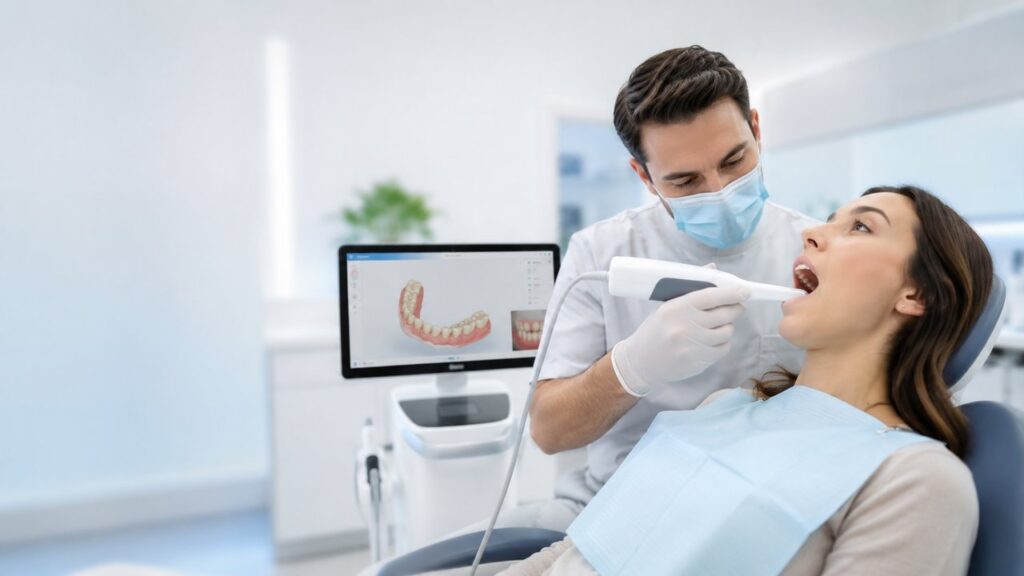
The advance of technology has fundamentally changed dentistry too. Procedures that once required uncomfortable impression pastes and long waiting times can today be done much more comfortably, quickly and precisely thanks to digital devices. From intraoral scanners to digital smile design, and from computer-aided manufacturing to digital planning, many innovations make the work of both patients and dentists easier. In this comprehensive article we take a detailed look at what digital dentistry is, how an intraoral scanner works, what digital smile design provides and the advantages these technologies offer patients.
What is digital dentistry?
Digital dentistry refers to the use of digital technologies in all processes, from diagnosis to treatment planning and production. In traditional methods, hand-taken impressions, prepared plaster models and manual planning have given way to intraoral scanners, three-dimensional digital models and computer-aided design-manufacturing systems. This approach makes every stage of treatment more predictable, more precise and more comfortable. Digital dentistry is not a single device but a set of technologies that work in harmony with one another, and it has become an integral part of modern clinics.
What is an intraoral scanner and how does it work?
An intraoral scanner is a pen-sized device used to take a digital impression of the teeth and oral tissues. The dentist moves this device around the mouth, transferring a three-dimensional image of the teeth to a computer screen within seconds. The scanner combines hundreds of images to create an extremely detailed and lifelike model of the teeth. Because no paste or tray is used during this process, the patient experiences no discomfort. The resulting digital model can be enlarged on the screen and examined from every angle, which allows the dentist to make a more accurate assessment. The intraoral scanner is one of the most important tools of digital dentistry.
The difference between traditional and digital impressions
In the traditional impression method, a mold of the teeth is taken with a tray placed in the mouth and the impression paste inside it. This process can cause a gag reflex and discomfort in some patients; it is also necessary to wait for the paste to harden. With a digital impression, none of these steps are needed; the teeth are imaged with the scanner within seconds. Digital impressions are more precise, reduce the margin of human error and can be repeated instantly when needed. In addition, because digital models can be stored on a computer, problems such as plaster models breaking or being lost do not occur. These advantages make digital impressions much more practical for both patient and dentist.
What is digital smile design?
Digital smile design is the design of your new smile on a computer before starting an aesthetic treatment. Taking into account your facial features, lip structure and existing teeth, how your teeth will look after treatment is planned in advance. In this way, both you and your dentist can see the likely result of treatment from the start and assess it together. Digital smile design allows you to share your expectations through a concrete visual; thus treatment is planned entirely specifically for you. This approach significantly increases predictability and patient satisfaction in aesthetic dentistry.
The advantages of digital dentistry for the patient
Digital technologies offer patients many concrete advantages:
- Comfort: Uncomfortable impression pastes are eliminated; the impression process becomes fast and comfortable.
- Precision: Digital impressions provide high accuracy, which is directly reflected in the result of treatment.
- Predictability: Because the likely result of treatment can be seen in advance, there are no surprises.
- Time savings: Many procedures are completed in a shorter time; in some cases fewer appointments are enough.
- Communication: Thanks to visual models, communication between dentist and patient is strengthened and the treatment process becomes more understandable.
In which treatments is it used?
Digital dentistry has a very wide range of applications. Intraoral scanners are used to take impressions for crowns, bridges and prostheses. In clear aligner treatment, the digital impression of the teeth forms the basis of the treatment plan. In implant treatment, digital imaging and planning help place the implant in the most accurate position. In aesthetic treatments, digital smile design allows the result to be planned in advance. This wide range of use shows that digital technology is present in almost every branch of modern dentistry.
Digital dentistry and treatment planning
One of the strongest aspects of digital technology is the precision it brings to treatment planning. On digital models, every stage of treatment can be planned in advance on a computer. The dentist works on detailed images of the teeth and tissues to determine the most suitable treatment approach. This planning allows situations that may be encountered during treatment to be foreseen and enables a safer process. Digital planning provides a great advantage, especially in complex treatments, and improves the quality of the result.
Digital technology and patient comfort
A significant part of dental anxiety stems from uncomfortable experiences in the past. Digital technologies largely improve this experience. The elimination of impression pastes, the shortening of procedures and the ability to see treatment in advance help the patient feel more comfortable and secure. In addition, explanations made through digital models help the patient understand the treatment better. Reducing the unknown also contributes to reducing anxiety. That is why digital dentistry offers not only technical but also psychological comfort.
Digital dentistry and treatment time
Digital methods shorten the time in many treatments. While taking an impression, sending it to the laboratory and preparing the model take time in traditional methods, the digital workflow speeds up these steps. In some treatments, the digital impression can be transferred directly to the production system, significantly shortening the process. Fewer appointments and faster results are an important advantage for both patient and dentist. However, it should be remembered that the time is not the same for every patient and varies according to the type and scope of treatment.
The digital smile design process step by step
1. Examination and digital impression: A digital impression of your teeth and oral structure is taken with an intraoral scanner. 2. Analysis: Your facial features, lip structure and smile line are assessed. 3. Design: Your new smile is designed on a computer and shown to you. 4. Assessment: You examine the design together and adjustments are made in line with your expectations. 5. Application: Treatment is planned and applied in line with the approved design. This step-by-step approach ensures that the result is entirely specific to you and predictable.
Is digital dentistry safe?
The devices used in digital dentistry are designed with patient safety in mind. Intraoral scanners work without causing any discomfort and do not harm the teeth. Digital imaging methods are safe when used appropriately and when needed. Storing digital data on a computer keeps patient information organized and accessible. The use of technology in the right hands increases both safety and treatment quality. That is why digital methods are a reliable part of modern dentistry.
Computer-aided design and manufacturing (CAD/CAM)
An important component of digital dentistry is computer-aided design and manufacturing systems. These systems allow restorations such as crowns and bridges to be designed on a computer using data from the digital impression and then produced precisely. Digital manufacturing reduces the margin of human error and contributes to restorations fitting the teeth closely. In some cases, this technology also helps shorten the treatment process. CAD/CAM systems allow the digital workflow to proceed seamlessly from diagnosis to production.
Who is it suitable for?
Digital dentistry methods are suitable for almost every patient. They provide a great advantage, especially for people who experience a gag reflex during traditional impressions, who are anxious or who want a comfortable experience. Patients with aesthetic expectations are especially satisfied with these methods because they can see the result in advance thanks to digital smile design. How the digital approach can be used for your treatment is determined by your dentist after a detailed examination. These possibilities offered by technology make the treatment experience more positive for everyone.
What you should know before your appointment
There are a few points you should know before starting a digital treatment process. First, sharing your expectations and aesthetic preferences openly with your dentist ensures that the digital design is made to suit you. Because the digital impression process is fast and comfortable, it does not require special preparation. Knowing that you will assess the result together during the design stage and that adjustments can be made if needed helps you approach the process more comfortably. Noting down any questions on your mind in advance also makes the consultation more productive.
The future of digital dentistry
Digital dentistry is a constantly evolving field and is expected to become even more widespread in the future. Technologies such as three-dimensional imaging, digital planning and computer-aided manufacturing are becoming more precise and accessible every day. These developments contribute to treatments being more predictable, more comfortable and faster. Digitalization in dentistry both improves the patient experience and increases treatment quality. Modern clinics adopting these technologies is an important part of providing better service to patients. It is anticipated that digital methods will be even more central to dentistry in the future.
The benefit of digital records for the patient
An often-overlooked advantage of digital dentistry is that patient records can be stored digitally. Digital impressions and images of the teeth are kept safely on a computer, which forms an important reference for future treatments. Changes that occur in the teeth over time can be tracked more easily by comparing them with previous digital records. Unlike plaster models, digital records take up no space and do not break or get lost. This organized and accessible record system makes treatment planning and follow-up easier. Digital records are a valuable resource for long-term oral health monitoring.
Frequently Asked Questions
Is taking an impression with an intraoral scanner painful?
No. The intraoral scanner works without causing any discomfort; because no paste or tray is used, the gag reflex is not triggered either.
Can I see the result in advance with digital smile design?
Yes. Digital smile design lets you see in advance, on a computer, how your teeth will look after treatment.
Are digital impressions more precise than traditional ones?
Digital impressions provide high accuracy and reduce the margin of human error. Being able to repeat them instantly when needed is also an important advantage.
In which treatments is digital dentistry used?
Digital impressions and planning are used in many treatments such as crowns, bridges, prostheses, clear aligners and implants. In aesthetic treatments, digital smile design stands out.
Do digital methods shorten treatment time?
In many treatments the digital workflow speeds up the process and may require fewer appointments. However, the time varies according to the type and scope of treatment.
Can a digital impression be applied to everyone?
Yes. A digital impression is suitable for almost every patient and provides great comfort, especially for people with a gag reflex.
To experience the comfortable and precise treatment that digital dentistry offers, you can book an appointment at Beyaz Köşe Oral and Dental Health Clinic.