

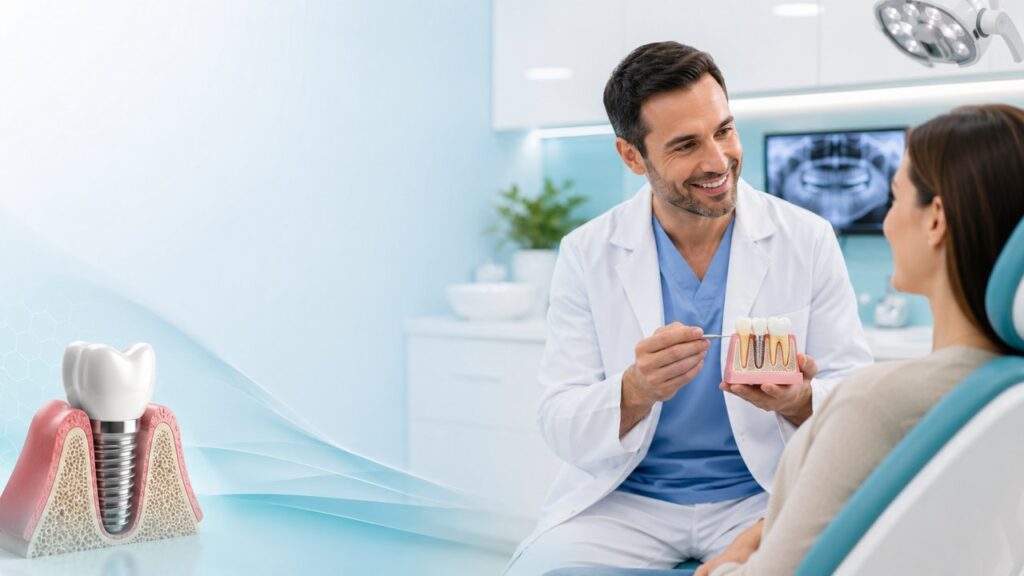
Dental implant treatment is a modern application that offers a solid and natural-looking solution to replace missing teeth. However, the success of implant treatment is closely related not only to the surgical procedure but also to the aftercare process. For the implant to integrate healthily with the jawbone and to be used without problems for many years, it is necessary to pay attention to both the healing period in the first days and long-term oral care. In this comprehensive article we take a detailed look at what to pay attention to in the first 24 hours and in the following days after an implant, nutrition recommendations, oral care and ways to extend the life of an implant.
Why is healing after implant treatment important?
The long-term success of implant treatment depends largely on the healthy progress of the healing process. An implant is a structure placed in the jawbone that integrates with the bone over time; this integration process is of critical importance for the implant to rest on a solid foundation. The care given to oral hygiene and the dentist’s recommendations during the healing period both supports this integration and helps prevent possible problems. For this reason, implant aftercare should be evaluated as an integral part of treatment. Following the care rules is one of the most important conditions for the implant to be used healthily for many years. The healing process can vary from person to person.
The first 24 hours after an implant
The first 24 hours after the implant procedure is the most important period for healing to begin healthily. During this process, it is normal to see some sensitivity, swelling or discomfort in the procedure area. In line with the dentist’s recommendations, it is important not to disturb the procedure area and to avoid forceful spitting and rinsing. Staying away from hot foods and drinks on the first day helps the area remain calm. Reducing pressure applied to the mouth and paying attention to rest are also helpful. Your dentist explains the care steps you need to apply during this period in detail. Paying attention to these measures in the first 24 hours is of great importance for both comfortable healing and the prevention of possible complications. It is best to follow the instructions.
Managing swelling and discomfort
Some swelling, bruising or sensitivity in the first days after an implant is an expected situation and usually decreases over time. These symptoms are a natural part of the body’s healing process. It is important to follow the dentist’s recommendations in managing swelling; your dentist recommends appropriate approaches when necessary. Pain and discomfort after the procedure are often at a manageable level with the measures recommended by the dentist. However, if swelling or pain increases more than expected, does not pass for a long time or becomes worrying, you should see your dentist. Each patient’s post-procedure experience is unique. If you have any doubts about the course of the symptoms, do not hesitate to consult your dentist; this is the most reliable approach.
Nutrition after an implant
Paying attention to nutrition after an implant is an important factor that supports the healing process. In the first days, soft and warm or cold foods should be preferred; soup (warm), yogurt, puree and similar soft foods are suitable options. Hot foods and drinks and hard, crunchy or spicy foods that can irritate the procedure area should be avoided. Chewing on the opposite side of the procedure area as much as possible protects that area. As healing progresses, a gradual transition to normal nutrition can be made in line with the dentist’s recommendations. Adequate fluid intake and a balanced diet also support overall healing. Nutrition recommendations can vary from person to person; it is best to follow the recommendations specific to you from your dentist.
Avoiding smoking and alcohol
Staying away from smoking and alcohol during the healing process after an implant is of great importance. Smoking can slow healing by negatively affecting the blood supply to the oral tissues and can negatively affect the integration of the implant with the bone. For this reason, smoking is considered one of the most important factors threatening implant success. Alcohol consumption can also negatively affect the healing process and is recommended to be avoided especially in the first period after the procedure. Staying away from these habits during the healing period contributes to both the healthy progress of the process and the long-term success of the implant. Quitting smoking is one of the most valuable steps that can be taken not only for the implant but also for general oral and dental health.
Oral hygiene after an implant
Paying attention to oral hygiene after an implant is of critical importance for the healthy progress of healing and the long life of the implant. In the first days, the procedure area should be handled gently and as recommended by the dentist; forceful brushing and rinsing should be avoided. As healing progresses, with the dentist’s guidance, regular oral care continues, including the procedure area. The teeth in the rest of the mouth should continue to be brushed normally. Your dentist can offer you specific recommendations and, when necessary, appropriate cleaning tools on how to keep the implant area clean. Correct oral hygiene is extremely important for protecting the health of the tissues around the implant. It is a step that should not be neglected.
The health of the tissues around the implant
The health of the tissues surrounding the implant plays an important role in the long-term success of implant treatment. The gum and supporting tissues around the implant remaining healthy depends on regular and correct care. Inadequate oral hygiene can lead to inflammation and problems in the tissues around the implant over time; this situation can also threaten the health of the implant. For this reason, cleaning the area around the implant regularly and carefully is of great importance. Regular dental check-ups allow the condition of the tissues around the implant to be followed and possible problems to be noticed early. Protecting the health of the tissues around the implant is a critical factor for the permanence of treatment. It is recommended that you follow your dentist’s recommendations on this.
The importance of check-up appointments
Going to regular check-up appointments after implant treatment is of great importance for following the success of treatment. At these appointments, the dentist assesses the condition of the implant and the surrounding tissues, follows the healing process and plans any interventions deemed necessary. Professional cleaning can also be done during check-ups. Regular check-ups allow possible problems to be noticed while they are still in the initial stage and to be intervened in early; this contributes to the long life of the implant. Following the check-up schedule recommended by your dentist is one of the most effective ways to protect your implant health. Not skipping check-ups is important for protecting both the implant and your general oral health over the long term.
How long does an implant last?
How long implants will last is one of the things patients most wonder about. The life of an implant depends on many factors such as oral care habits, regular dental check-ups, general health status and lifestyle. Well-cared-for implants that have regular check-ups can be used healthily for many years. However, there are also factors that negatively affect the life of an implant; inadequate oral hygiene, smoking and neglecting check-ups can threaten implant health. The most important condition for an implant to have a long life is regular and correct oral care and periodic dental check-ups. For this reason, implant aftercare is not limited to the first days but is a process that needs to be maintained for a lifetime.
Ways to extend the life of an implant
To use your implant healthily for many years, it is necessary to pay attention to a few basic points. Brushing your teeth regularly and with the correct technique at least twice a day keeps the entire mouth clean, including the area around the implant. Using the cleaning tools recommended by the dentist helps clean the areas around the implant. Staying away from smoking is important for protecting implant health. Not skipping regular dental check-ups and having professional cleaning allow the condition of the implant to be followed. In those with a teeth clenching habit, protective measures can be evaluated. These simple but regular habits contribute to extending the life of the implant and benefiting from the treatment with satisfaction for many years.
Implants and teeth clenching (bruxism)
The habit of clenching and grinding the teeth, that is bruxism, is a factor that can affect implant health. The excessive and constant force on the teeth and implants during bruxism can, over time, create pressure on the structures on the implant. For this reason, in people with a teeth clenching habit, measures to protect the implant can be evaluated. Protective approaches such as a night guard can help protect both natural teeth and implants from the effects of teeth clenching. If you think you have a teeth clenching problem, you can review our bruxism article, where we cover the subject in more detail, and consult your dentist. In protecting implant health, managing such factors plays an important role.
Implants and general health
The success of implant treatment and the healing process can also be affected by the person’s general health status. Because some systemic conditions and medications used can affect the healing process and implant health, it is important to inform the dentist about these matters before treatment. Protecting general health and regular life habits also contribute positively to the long-term success of the implant. That oral and dental health is an inseparable part of general health is also emphasized by organizations such as the World Health Organization. For this reason, implant treatment should be approached with a holistic approach in terms of not only oral health but also general health. It is important to share your medical history with your dentist.
Implant treatment and tooth loss
Tooth loss is not only an aesthetic and functional problem; it can also affect the jawbone and neighboring teeth over the long term. Implant treatment aims to restore both chewing function and aesthetic appearance by offering a solid solution to replace the missing tooth. Because the implant is placed in the jawbone, it can also contribute to the stimulation of the bone. There are also different solutions besides implants in replacing missing teeth; which method is suitable is determined according to the person’s condition. For more information about tooth loss treatment options, you can review our tooth loss treatment options article and get information about our dental implant service.
The temporary and permanent prosthesis process
At some stages of implant treatment, temporary solutions can be used while the healing process continues. These temporary applications help the patient have a comfortable process in both aesthetic and functional terms. After the healing process is completed, a permanent prosthesis is applied on the implant. The details of the temporary and permanent prosthesis process vary according to the patient’s condition and treatment plan. Following the dentist’s recommendations during this process is important for both the healthy progress of healing and the success of the result. During the period when a temporary prosthesis is used, attention should be paid to oral care and the dentist’s instructions. Each stage of the process is planned and managed by the dentist with the patient’s condition in mind.
Which symptoms require seeing a dentist?
Healing after an implant usually progresses without problems; however, some symptoms require seeing a dentist. Situations such as more than expected and long-lasting pain after the procedure, gradually increasing swelling, unusual symptoms coming from the procedure area or a feeling of movement in the implant area are symptoms that need to be assessed. In such situations, it is important to see your dentist without delay. Early intervention allows possible problems to be resolved more easily. Following the instructions given by your dentist and going to the recommended check-ups helps healing be completed healthily. Do not hesitate to consult your dentist when you have any doubt about your implant health. Not ignoring the symptoms is the most reliable approach for protecting implant health.
Long-term care after an implant
Implant care is not limited to the healing period; for the implant to remain healthy for many years, care needs to be maintained for a lifetime. The basis of long-term care is regular and correct oral hygiene and periodic dental check-ups. Daily brushing and the use of the cleaning tools recommended by the dentist help keep the area around the implant healthy. During regular check-ups, the condition of the implant and the surrounding tissues is assessed. Staying away from smoking and protecting general health also contribute to long-term implant health. These regular habits are the key to benefiting from the implant with satisfaction for many years. Making implant aftercare a routine means protecting the investment made in the treatment.
Common misconceptions about implant aftercare
One of the most common misconceptions about implant aftercare is that implants do not require care; in reality, implants also require regular cleaning and check-ups like natural teeth. Another misconception is that there is no need for dental check-ups after an implant is made; in reality, regular check-ups are critical for protecting implant health. In addition, it is thought that the tissues around the implant will not experience problems; in reality, inadequate care can lead to inflammation in these areas. It is also wrong that smoking has no effect on the implant; smoking can negatively affect implant success. The most reliable way to reach accurate information is to consult an experienced dentist.
Frequently Asked Questions
What should I eat after an implant?
In the first days, prefer soft and warm/cold foods (soup, yogurt, puree). Avoid hot, hard and spicy foods; chew on the opposite side of the procedure area.
How long does an implant last?
Well-cared-for implants with regular check-ups can be used for many years. Their life depends on factors such as oral care, check-ups, smoking and general health.
Can I smoke after an implant?
Smoking can negatively affect healing and the integration of the implant with the bone. Staying away from smoking during and after healing is important for implant health.
How is the area around an implant cleaned?
The area around the implant should be kept clean with regular brushing and the special cleaning tools recommended by the dentist. Correct hygiene protects the health of the surrounding tissues.
Are check-ups after an implant essential?
Yes. Regular check-ups allow the implant and surrounding tissues to be followed, catch possible problems early and contribute to the long life of the implant.
Is swelling after an implant normal?
Some swelling and sensitivity in the first days is expected and decreases over time. If swelling increases more than expected or lasts a long time, see your dentist.
To get information about implant treatment or implant aftercare, you can book an appointment at Beyaz Köşe Oral and Dental Health Clinic to request a comprehensive assessment.